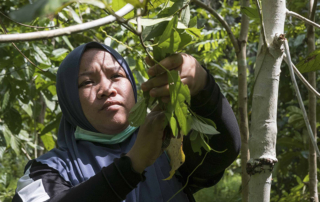
Celebrating women in conservation By Geanie Cresswell|2024-03-08T14:30:19+00:00March 8th, 2024|Gender, Indigenous Peoples, Youth|Comments Off on Celebrating women in conservation Read More
How a small Cameroonian organisation saved 20,000 ha of tropical rainforest By Merline Touko Tchoko, Geanie Cresswell|2024-04-15T06:38:50+00:00March 6th, 2024|Advocacy, Community, Congo Basin, Forests, Indigenous Peoples|Comments Off on How a small Cameroonian organisation saved 20,000 ha of tropical rainforest Read More
María Chang By Nina Seale|2024-01-10T17:29:32+00:00January 10th, 2024|Comments Off on María Chang Read More
Five success stories of 2023 By Geanie Cresswell|2024-02-06T10:26:07+00:00January 10th, 2024|Biocultural Diversity, Conservation Optimism, Deep-sea mining, Gender, Indigenous Peoples|Comments Off on Five success stories of 2023 Read More
Oceanus Conservation By Nina Seale|2024-01-08T11:43:15+00:00January 8th, 2024|Comments Off on Oceanus Conservation Read More
Amphibian Programme By |2024-01-11T16:59:56+00:00December 22nd, 2023|Comments Off on Amphibian Programme Read More
Podcast: Miriam Supuma talks about Papua New Guinea By Miriam Supuma|2024-04-18T09:45:34+00:00November 1st, 2023|Alliance of Solwara Warriors, Biocultural Diversity, Bismarck Ramu Group, Interviews, Our Team, Papua New Guinea|Comments Off on Podcast: Miriam Supuma talks about Papua New Guinea Read More
In it for the long haul: Bringing biodiversity to oil-palm country By Claire Adler|2024-04-18T09:42:14+00:00October 18th, 2023|Approach, Conservation Optimism, Forests, Long term funding, More than Carbon|Comments Off on In it for the long haul: Bringing biodiversity to oil-palm country Read More
Hope for amphibians: the comeback stories By Nina Seale|2024-04-18T09:39:38+00:00October 6th, 2023|Amphibians, Extinction, Global Amphibian Assessment, IUCN, Knowledge Base, Red Listing|Comments Off on Hope for amphibians: the comeback stories Read More
The overlooked extinction crisis: amphibians By Nina Seale|2024-04-18T08:47:46+00:00October 4th, 2023|Amphibians, Extinction, Global Amphibian Assessment, IUCN, Knowledge Base, Red Listing|Comments Off on The overlooked extinction crisis: amphibians Read More