All conservation movements started somewhere – but the initial stages of an environmental career, founding an organisation, and building a track record for impact, are full of uncertainty. The right support at the right time, with organisations willing to invest in the early stages and trust the vision of an individual, can enable conservationists to fulfil their potential.
We’re delighted to share some of the achievements of our partners who we have seen grow from receiving seed grants to making a difference for overlooked species and ecosystems.
When we first met Marina Kameni, she was a herpetology student hoping to study the amphibian diversity of and potential for community conservation in Mount Manengouba, Cameroon. Under the mentorship of another one of our partners, Caleb Ofori-Boateng of Herp Conservation Ghana, this project turned into a seven-year strategy for amphibian conservation in this critical site for biodiversity and led to the founding of Marina's organisation, Herp-Cameroon, the first of its kind.
Since then, she has gone on to win the Mohammed Bin Zayed Species Conservation Fund Award, a Future for Nature Award, and most recently, a Whitley Award (or the 'Green Oscar') for the work she has done researching and protecting amphibians in Mount Manengouba.
Marina is an excellent example of seed funding success, demonstrating that supporting conservation starts at the very conception of a project. This is why, as you will read below, Synchronicity Earth continues to provide this funding to early-stage conservationists and organisations across all of our programmes.
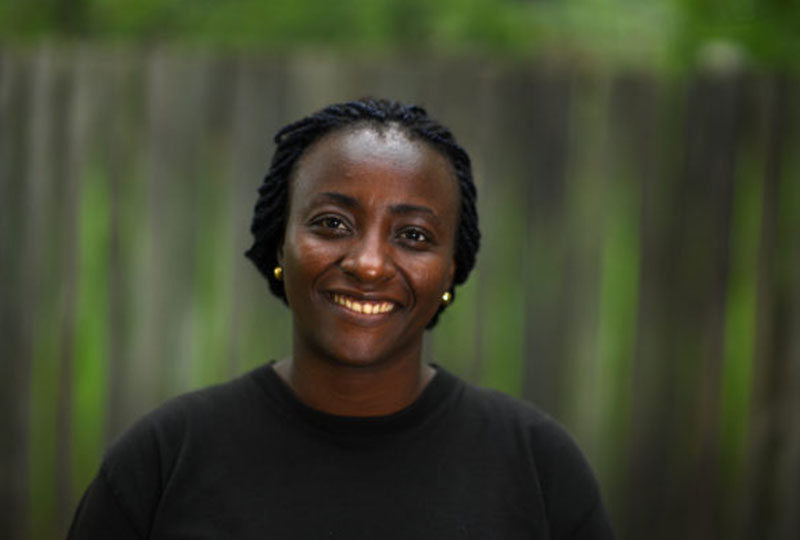
Marina Kameni. Image: Herp Cameroon.
Rahayu Oktaviani
Fighting for the rights of tree-top dwellers
The Javan gibbon's call is a central part of the sounds of the Citalahab rainforest, so valued by the community within it that local folklore claims that their song is what brings rain.
Keeping these Endangered monkeys singing up in the treetops is what sparked Rahayu (Ayu) Oktaviani's interest in researching and protecting them, leading up to her founding of Yayasan Konservasi Ekosistem Alam Nusantara (KIARA).
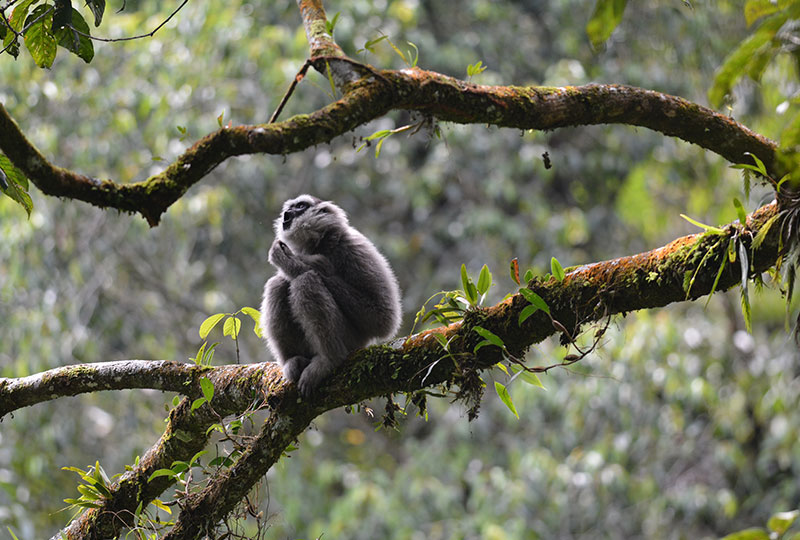
A young Javan gibbon learning to sing. Image: KIARA.
Ayu's research and conservation surrounding this species is a leap in the right direction for reversing the harm they are facing – largely threatened by habitat loss. As well as safeguarding this extraordinary species, KIARAs work has provided novel insights into the gibbon's behaviours and habitat needs, amplifying the impact of their work.
Ayu involves the Indigenous Peoples of the area with community outreach and education programmes. KIARA runs a women's empowerment programme to improve the financial literacy and sustainable textile creation methods of local women as well as community wide amphibian and reptile conservation training – increasing the safety of all beings that inhabit the forest and empowering the next generation of local conservationists.
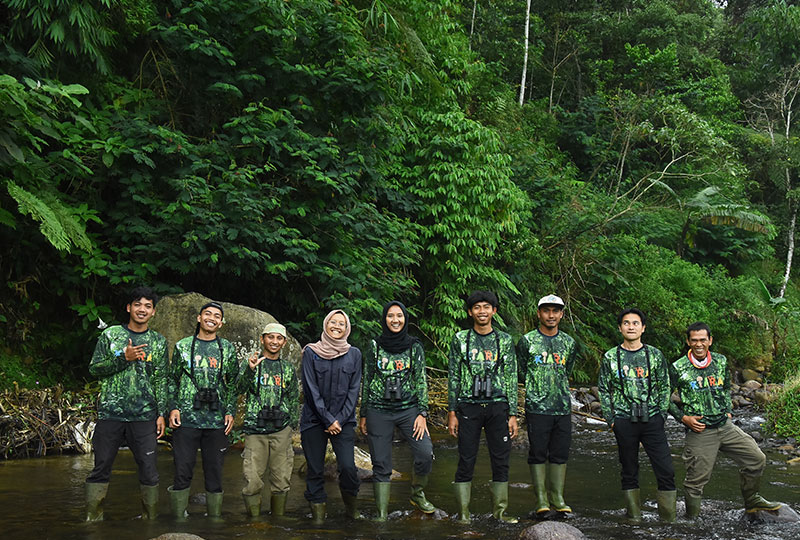
The KIARA team with Ayu Okataviani (centre). Image: KIARA.
In 2025, Ayu was presented with the prestigious Whitley Award for her work protecting the habitat of the Javan gibbons and the rainforest canopies they call home. This goes to show that funding conservationists like Ayu that necessitate community conservation involvement and education extends the impact beyond direct conservation and into the people who live that conservation every day.
Aristide Chacgom
A voice for sustainable forest practices in the Congo Basin
Under Aristide Chacgom's leadership, Green Development Advocates (GDA) has contributed to reducing planned forest conversion, saving over 20,000 hectares from immediate deforestation.
The organisation has trained over 120 people in agroecology, supported 21 hectares of sustainable production, and strengthened the capacities of 40 women leaders from AFRiSC-Campo in project development, biodiversity conservation, restoration, and agroecology.
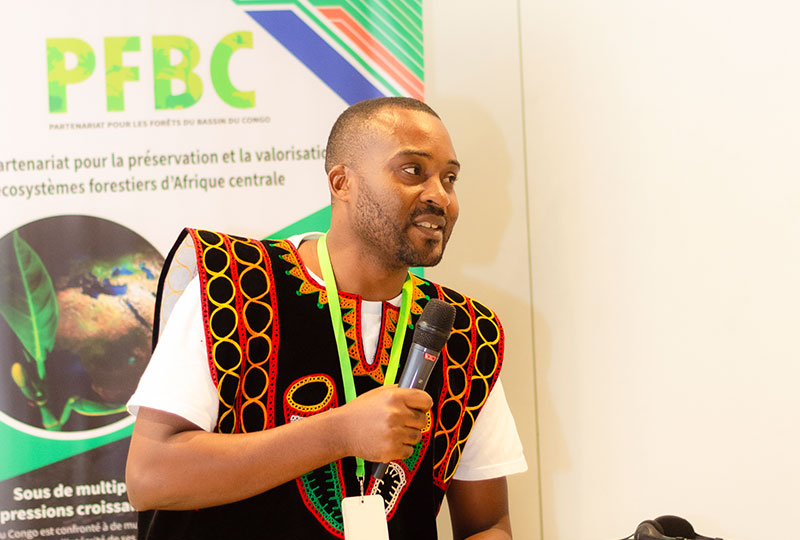
Aristide Chacgom speaking at CBFP 20th Meeting of Parties. Image: Ferik and Merline Touko.
When Aristide became the Coordinator of GDA, Synchronicity Earth recognised his leadership potential in community-driven conservation and provided early, flexible support at a pivotal stage of the organisation's journey.
Mutual support and trust act as the foundation for this partnership, helping Aristide strengthen both his leadership skills and GDA's organisational capacity. Today, he is recognised as a highly respected civil society voice for sustainable forest management in the Congo Basin.
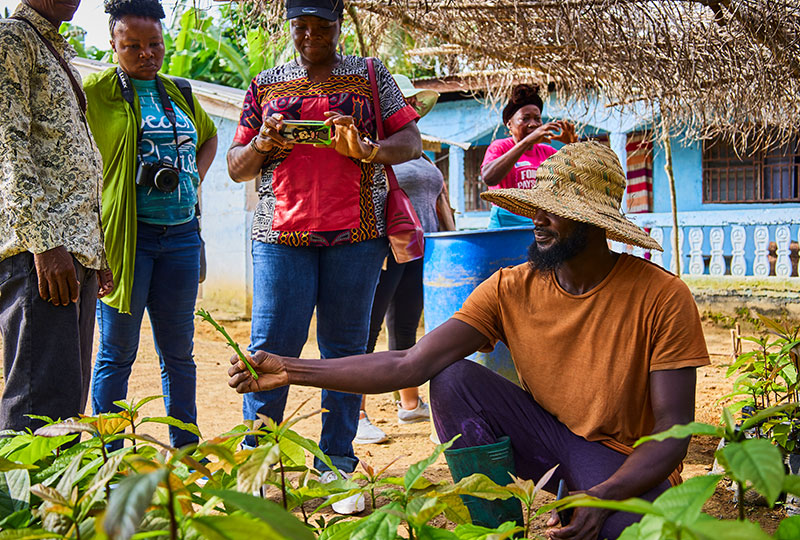
GDA at Afrix Agropastoral Fair 2025. Image: Green Development Advocates.
Focusing on educating and empowering the inhabitants of the land on their rights and the rights of the environment, GDA itself has grown into a well-structured and credible organisation delivering impactful conservation and community-based programmes.
Aristide's story demonstrates how investing in local leadership, organisational resilience, and long-term partnerships empowers communities to protect both their forests and their future.
María Chang
Protecting the overlooked in Guatemala's cloud forests
María Chang was at the end of her Evolutionarily Distinct and Globally Endangered (EDGE) fellowship – researching the nimble long-limbed salamander and working as a biology teacher in Guatemala – when Synchronicity Earth began funding her research.
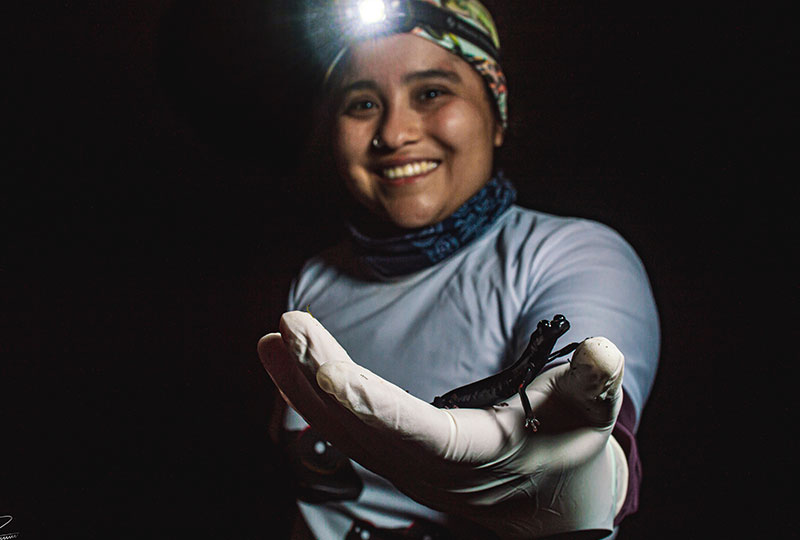
María Chang holding out a nimble long-limbed salamander. Image: María Chang.
Now working to launch her own foundation with the seed funding provided, she will seek to co-develop economic opportunities for the local community in Laj Chimel, Guatemala, while working to conserve the salamanders and other biodiversity inhabiting the cloud forests.
This foundation will focus on ensuring local peoples are educated on the amphibians they cohabitate with – fighting misinformation and bolstering the number of protected areas that local amphibians can live in safely.
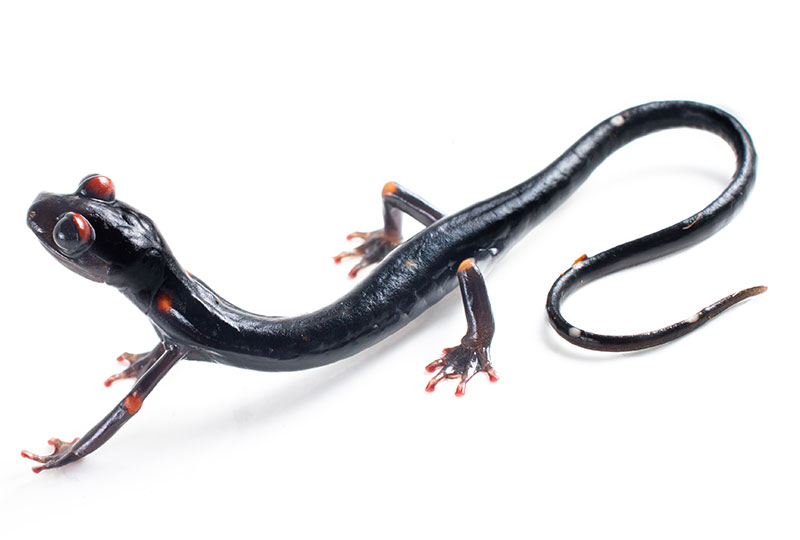
Nimble long-limbed salamander, the focus of María’s research. Image: María Chang.
María is also the National Program Coordinator for Guatemala for another Synchronicity Earth partner – Amphibian Ark. Through her work with Amphibian Ark, she supports the coordination of local partners to collaborate on an ex situ programme, strengthening the capacity for conservation in the area.
Mike Baltzer
Distracted from tiger conservation by the plight of freshwater fish
Mike Baltzer’s expansive career ranges from conserving forest birds in Uganda and carnivores in Eastern Europe, to leading the WWF’s global tiger programme for nine years. Yet, as passionate as he was about the emblematic tiger, he was drawn towards the thousands of even more threatened species lacking the funding and attention that tigers have gained: the freshwater extinction crisis.
This shift began when conserving wildlife around the Mekong and Danube rivers. But even with the devastating risks of an 87% decline in migratory freshwater fish since 1970, there was no concerted international effort to protect this huge group of species.
So, in 2019 he set up SHOAL, an initiative seed-funded and hosted by Synchronicity Earth (and later co-hosted by Re:Wild) and, alongside a group of experts, determined that freshwater species urgently needed accelerated action and global collaboration.
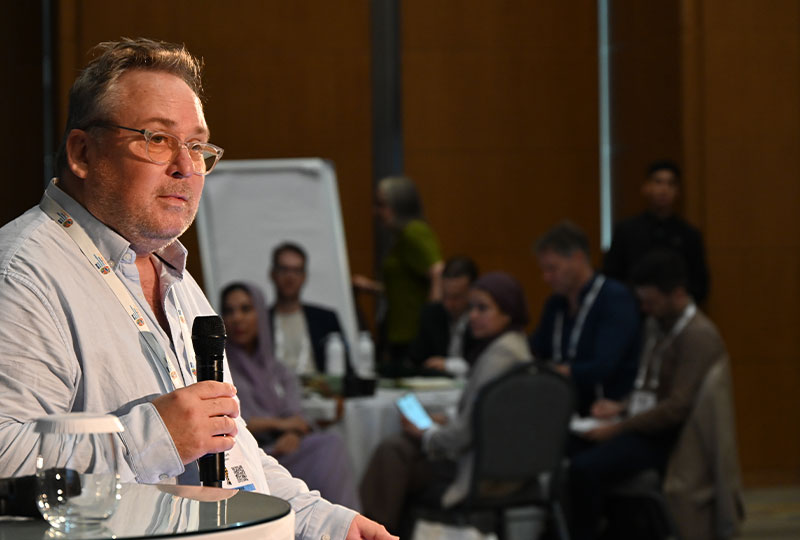
Mike Baltzer speaking at the IUCN World Conservation Congress. Image: Geanie Cresswell.
Since then, SHOAL has made a huge splash for freshwater conservation: launching an annual report on New Fish Species, a programme to find the world’s Lost Fishes, and the SHOAL Alliance of Zoos and Aquaria for freshwater species. With over 100 partners – from the IUCN to local groups working on the ground – the SHOAL partnership is becoming a powerful force for saving overlooked species.
With no sign of slowing down, SHOAL’s latest strategy seeks to protect 1,000 of Earth’s most threatened freshwater fish species by 2035.
“Taking the first steps on a long, ambitious journey, whatever your career stage, it is transformational to have an organisation like Synchronicity Earth believe in what you are doing and that you can turn the vision into reality.” Mike Baltzer, SHOAL
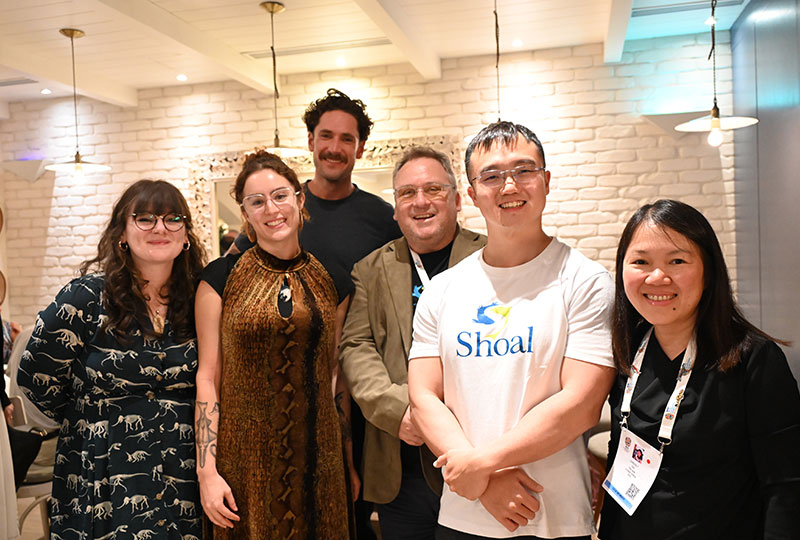
The SHOAL team at the IUCN World Conservation Congress. Image: Geanie Cresswell.
Kathryn Audroing
An advocate for small island states on the global ocean stage
When Kathryn Audroing became an Ocean Voices Fellow, she was conducting research on migratory sea turtles and engaging the local community. Since her Fellowship she has also become involved with coastal restoration within the Marine Resilience Initiative (MARIN) Tobago Project.
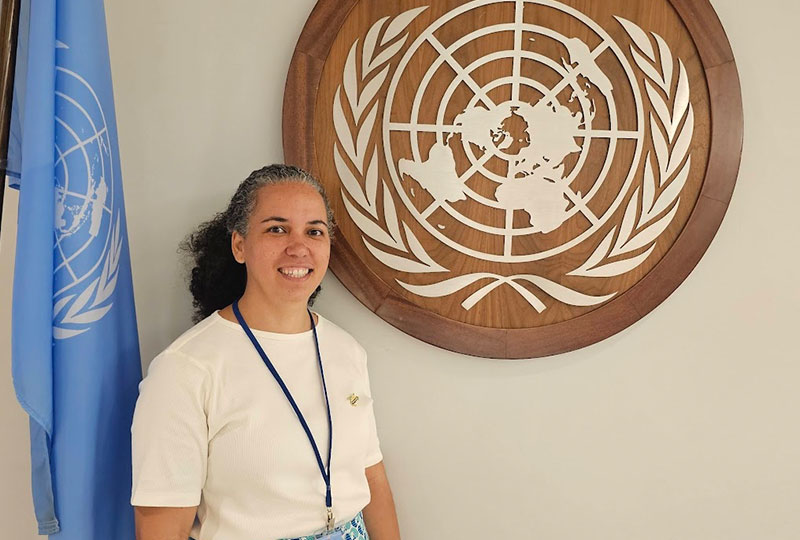
Kathryn Audroing. Image: Ocean Voices.
The Ocean Voices fellowship programme, supported by Synchronicity Earth, provides professional support for early career ocean professionals. This includes financial support, mentoring, and law/policy training, to enable them to pursue their research interests and amplify their findings to influence national and international policy.
In Kathryn's case, she chose to focus on research about the impact of climate change on marine turtles and their habitats, emphasising the importance of combining local knowledge with scientific data for strengthening policy. This work led to her being invited to assist Trinidad and Tobago's delegation in two major international policy negotiations for the Global Plastics Treaty and the High Seas Treaty.
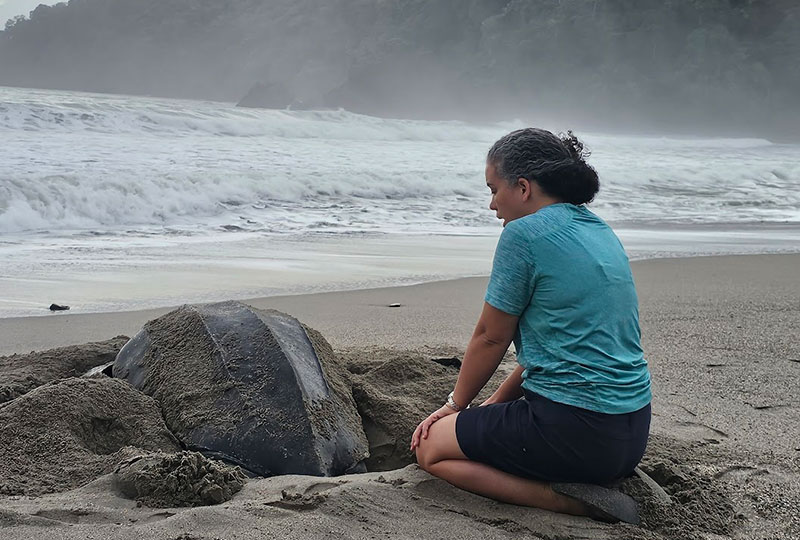
Kathryn Audroing with a sea turtle in Trinidad and Tobago. Image: Kathryn Audroing.
Her experience as a conservationist with direct experience working with island communities and bringing their voices abroad, combined with traditional knowledge and ecological research, to advocate for international ocean protection saw her presented with the Ocean Stewardship Award in March 2026 through an independent committee formed by the late ocean lawyer and advocate Dr Kristina Gjerde.
The 'butterfly effect'
These partners are shining examples of how funding at the early stages of conservation development provides researchers with the trust, belief, and backing they need to truly flourish within the conservation landscape.
From winning awards for outstanding impact to helping create international policy that safeguards our most vital ecosystems, the achievements of our long-term partners are a testament to the success of seed funding, showing the 'butterfly effect' a small grant can have in supporting a career dedicated to conservation, and all the good that comes from it.
Synchronicity Earth aims to provide long-term, flexible funding to organisations protecting overlooked and underfunded species and ecosystems across our programmes.
Learn more about our approach to supporting our partners, and for more impact stories, check out our long-term funding series.