
Conservation funding and practice
The way we do things
Culture is not just about beliefs and values, it is also the accumulated habits and assumptions that govern how sectors and institutions operate. In conservation and environmental philanthropy, these habitual ways of working have often reinforced the same power imbalances they have sought to address.
The culture of conservation and philanthropy
Synchronicity Earth has spent years building a picture of environmental funding flows: Who sets the priorities? Whose knowledge gets treated as credible? Where are the greatest gaps? We have learnt that many ‘conventional’ conservation and grant-making practices are ill-equipped to support locally led conservation fairly or effectively, not through bad intent, but through unexamined assumptions baked into processes and structures.
This is why we work intentionally with other funders and conservation organisations to reimagine the cultures of conservation and environmental giving. We continually reflect on and adapt our own grant-giving processes. We convene funders to explore power dynamics in environmental philanthropy and to promote approaches that are genuinely rooted in place.
We are also part of a broader and growing movement; one that is steadily, collectively, shifting what good funding looks like.
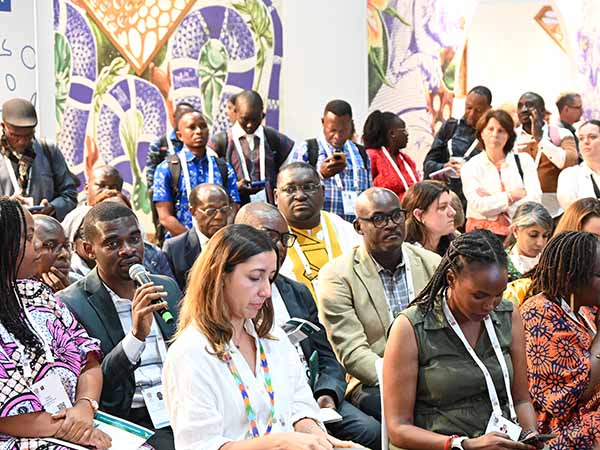
A question from the audience during a session exploring power relationships in conservation funding held at the Africa Pavilion during the IUCN World Conservation Congress, Abu Dhabi, 2025. Image © Geanie Cresswell
“I think all of us need to reflect on where we are now and what we are going to do. It’s only through our collective action and using the knowledge and values of Indigenous People that we can move forward. These are the values of reciprocity, solidarity, sharing, and caring – of being above our personal interest and upholding the common good. (…) We have to take care of future generations, not only future generations but the future of humanity.”
– Joan Carling, Kankanaey People of the Igorot group, Philippines
Culture change
Conservation on different terms
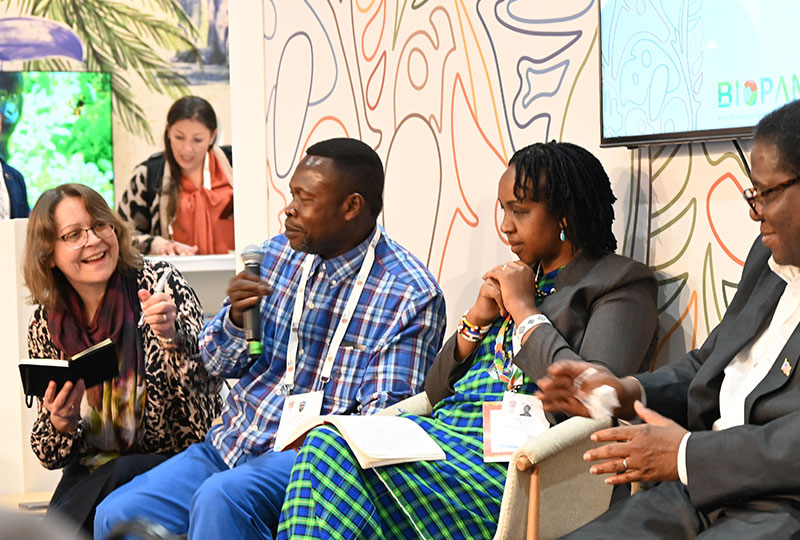
Synchronicity Earth Senior Programme Manager Sophie Grange-Chamfray speaking with Congo Basin partners at the Africa Pavilion at IUCN WCC, 2025
What would conservation look like if it were genuinely reimagined? That question was the thread running through four days of programming at the IUCN World Conservation Congress in Abu Dhabi in October 2025, one of the most significant gatherings in the global conservation calendar.
Synchronicity Earth was a central coordinator and collaborator for the Reimagining Conservation Pavilion, working alongside the ICCA Consortium, Maliasili, the Cambridge Conservation Initiative, Forest Peoples Programme, and others to create a space in which Indigenous and local community leaders, scientists, and practitioners could articulate fresh ideas for conservation. Sessions explored our responsibilities to the more-than-human world, rights and power in area-based conservation, historical injustice, and how financing must change to better serve people and nature.
We co-convened a day of programming on ‘Resourcing Transformation’ and moderated a panel on shifting power and practice in conservation philanthropy. This Pavilion was a key component of our wider focus on supporting partners from across our Programmes to attend the Congress, bringing diverse and historically marginalised voices into a room where conservation’s future direction was being shaped.
“For Dynamique des Groupes des Peuples Autochtones (DGPA), taking part in the World Conservation Congress is a strategic opportunity. As a member of IUCN, it allows us to deliver strong messages through motions, influence public policies, and strengthen national advocacy efforts. (…) Each Congress is a platform to remind the world that conservation must include those who live with nature, not exclude them.”
– Patrick Saidi Hemedi, DGPA
From pledges to practice
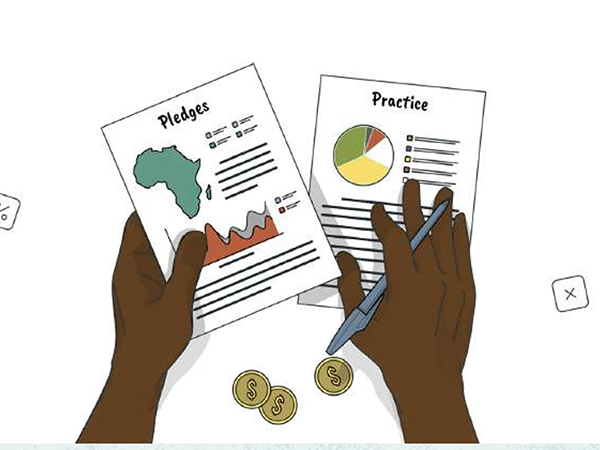
An illustration from the ‘Pledges to Practice Report‘, co-authored by Maliasili and Synchronicity Earth
Conservation impact depends not just on what is funded, but on how. At COP26 in 2021, governments and private funders pledged US$1.7 billion under the Glasgow Climate Pact, with a commitment to fund via Indigenous peoples and local communities. But three years later, research showed that only 2.1% had gone directly to local organisations, networks, or funds.
The Good Funding Hub, held during New York Climate Week 2024, was created on the premise that better funding choices lead to greater impact, and that changing the culture of philanthropy is itself a form of conservation work.
Synchronicity Earth was a core member of the collaborative group of funders that shaped the Hub, contributing to discussions on direct funding to local organisations, trust-based practice, and shifting power in conservation philanthropy. During the week, Synchronicity Earth and Maliasili jointly launched From Pledges to Practice, a report examining how ‘early mover’ funders are working to get more funding directly to local African conservation organisations and what the wider sector can learn from them.
“Our belief is that in most cases organizations that are run by local nationals or have a strong component of local nationals are going to be more successful (…) When this is your home, you are deeply invested, you have a socio-cultural understanding, you have a political understanding.”
– Wildlife Conservation Network