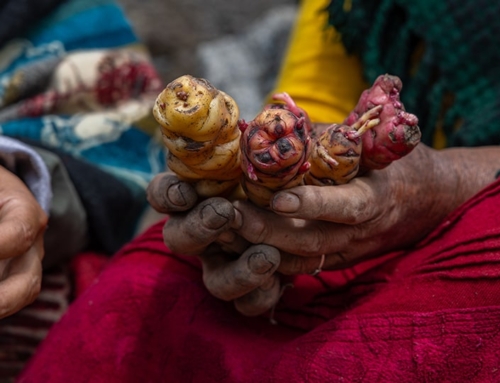
Young people are inheriting the world as it is today – and with it, the biodiversity crisis. Yet funding remains scarce, short-term, and heavily restricted.
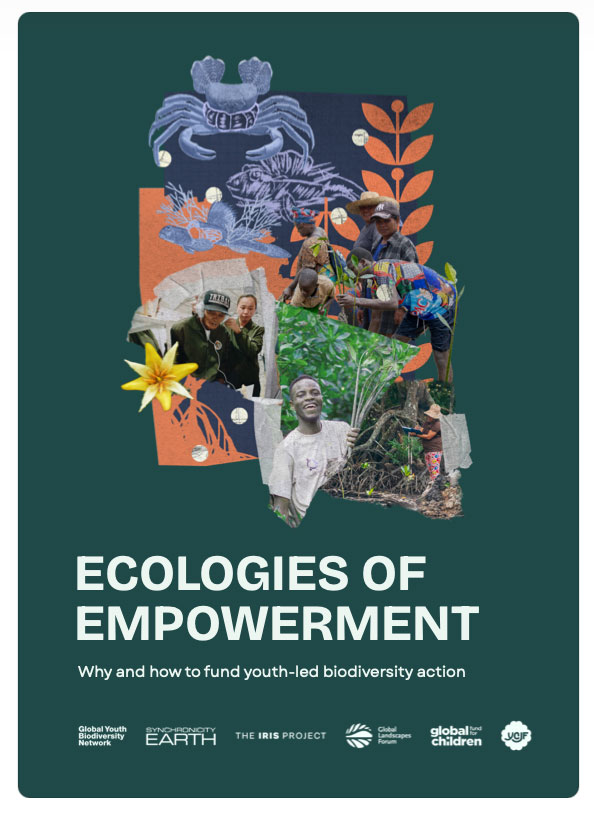
Given this urgent need to support youth-led biodiversity initiatives, Synchronicity Earth has collaborated on a new report, Ecologies of Empowerment: Why and how to fund youth-led biodiversity action.
Produced with the Global Youth Biodiversity Network (GYBN), the Global Landscapes Forum, and The Iris Project, it makes the most comprehensive case yet for why youth biodiversity funding is failing and what needs to change to protect our planet's future.
Download Ecologies of Empowerment or the Executive Summary.
Why youth biodiversity? The case for funding now
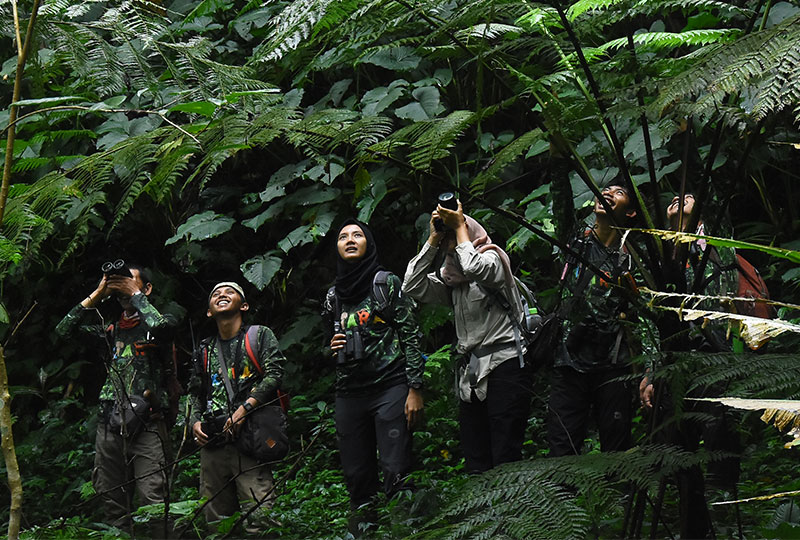
The local field team observing wild gibbons in the last submontane forest in java © KIARA
“Funding youth is far more than ‘investing in the future’ – it is (re)establishing trust so that we can actively consider and redesign systems and approaches that are no longer working. This will ensure that we actually do have a future.”
Jessica Sweidan, Synchronicity Earth Co-Founding Trustee
On average, the youth initiatives surveyed in Ecologies of Empowerment work across a range of distinct areas simultaneously: from habitat restoration to species monitoring, and community-led conservation to contributions to national and international policy and beyond.
The majority also invest heavily in peer leadership development, strengthening a regenerative layer of skill development that the conservation sector needs in a rapidly changing world.
Youth leadership in action
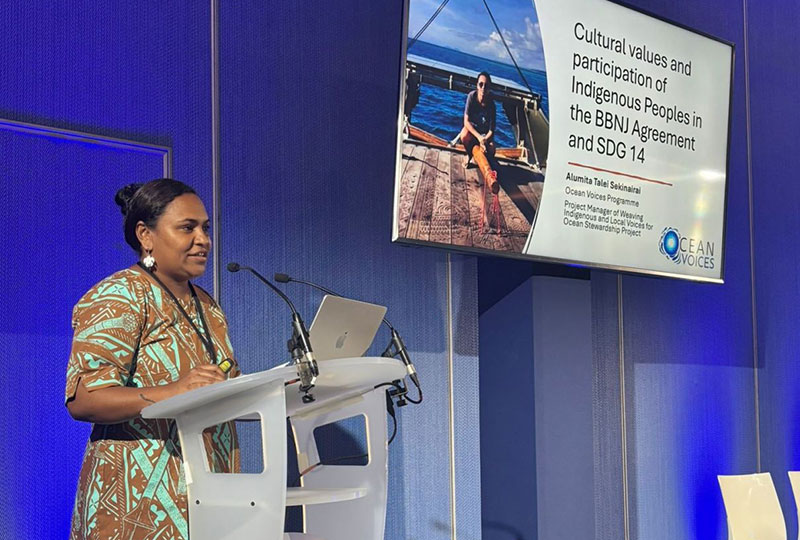
Alumita Talei Sekinairai, Ocean Voices Fellow Alumni, presenting at the United Nations Ocean Conference © Anna Heath
Alumita Talei Sekinairai is the co-Founder of iTaukei Women in Conservation (iTWC), an Indigenous women and youth-led marine conservation initiative in Fiji and partner to Synchronicity Earth.
“Our elders say: ‘Go to school, but make sure you come back to us!'” she recounts. “Our communities have so much traditional knowledge, but how will they learn about the complex ecosystem challenges we face? Formal systems fail to recognise our knowledge, and policies fail to include us.”
iTWC bridges that gap through coral reef restoration, ocean literacy, and sustainable livelihoods. A defining moment came when the team presented their coral reef baseline assessment back to the Serua community – and watched members take ownership of the findings.
Vilisi, aged 67, reflected: “I grew up on this island. Today I learned that everything we rely on will be impacted by climate change. Human activities – like the use of pesticides in farming – contribute to the destruction of our coral reefs. It is a profound lesson for me about how we sustain our resources to protect our future generations.”
“Conservation is most effective when communities are leaders, not participants.”
Alumita Talei Sekinairai, iTWC Co-Founder
Ecologies of Empowerment at a glance: The state of youth biodiversity funding
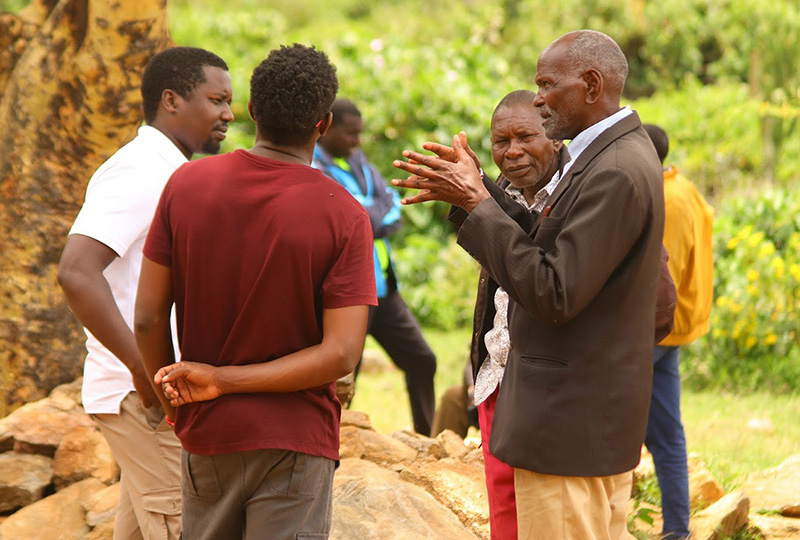
Holding community dialogues on peace in Laikipia, Kenya. Bernard Loolasho and Eliud Kitangwan discuss how strengthening Indigenous governance structures contributes to conflict resolution and natural resources stewardship. © Bernard Loolasho
The report, which surveyed 161 youth-led initiatives across 57 countries, and gathered input from a series of workshops and interviews with funders and young people, revealed the difficult situation facing young conservation leaders:
- 93% are volunteers;
- 85% lack adequate funding;
- 44% operated on under $1,000 in 2024; and
- 20% had no income at all in 2024.
“Leadership should not be limited to those who can afford it. If we rely on privilege and personal sacrifice at this scale, we will never have a diverse and accessible movement.”
Swetha Stotra Bhashyam, Synchronicity Earth Youth Affiliate
The triple glass ceiling
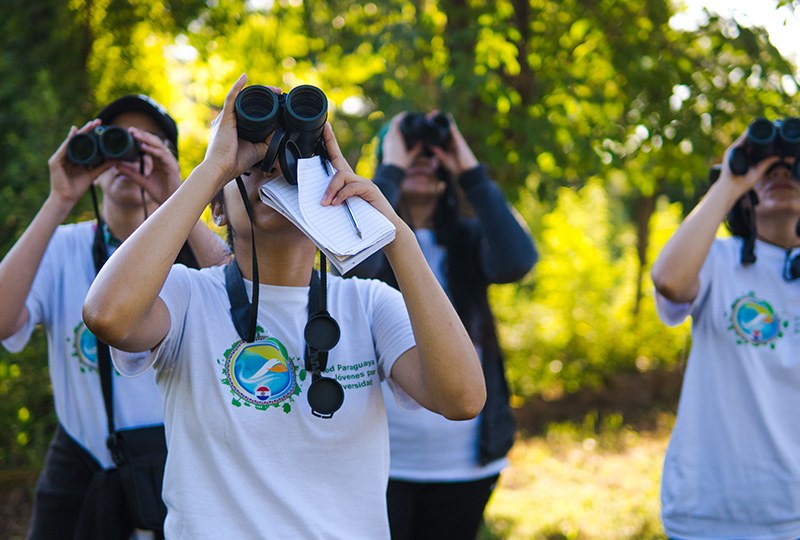
GYBN Paraguay on a birding trip © GYBN Paraguay
Most available funding for youth biodiversity initiatives exists under a ‘triple glass ceiling’ where grants are:
- Too small – 62% of grants are under $10,000;
- Too short – 58% last under a year; and
- Too restricted – 88% are project-only.
Together, these constraints prevent youth groups from building the organisational stability they need to grow. As one young respondent put it, these characteristics mean they “miss opportunities to make ourselves more sustainable.”
“Youth-led initiatives all around the world require greater access to funding, safe infrastructure, training opportunities, and institutional support. Equally essential is protection and safe operating environments for young people on the ground.”
Cycling Palestine
Cycling Palestine is an independent youth-led initiative that empowers Palestinian youth, children, and girls through weekly cycling tours in the West Bank where participants are introduced to native Palestinian plants and key biodiversity sites. Like iTWC, Cycling Palestine demonstrates that transformative learning often happens outside of formal education, grounded in community and traditional knowledge.
How can funders support the youth biodiversity movement?
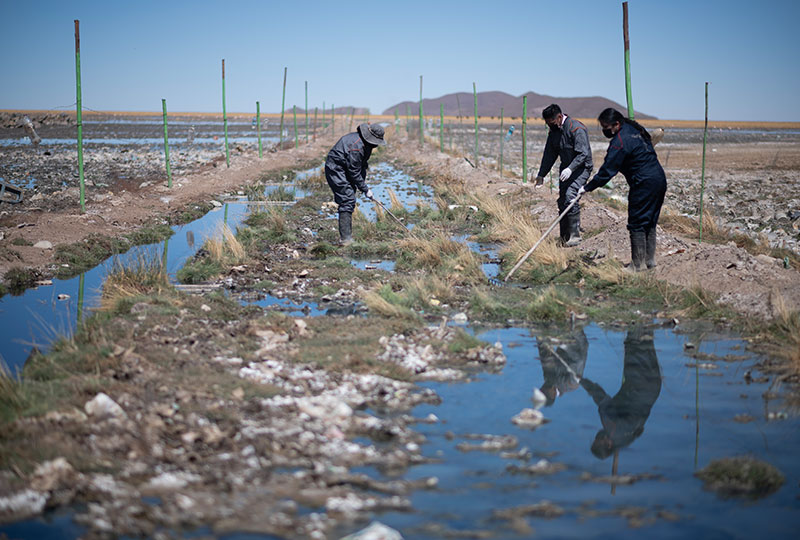
The Uru Uru Team, an Indigenous women-led collective in Bolivia, planting totoras. © Uru Uru Team
According to the Youth Climate Justice Fund, just 0.96% of grants from the largest climate foundations support youth-led climate justice initiatives. But a biodiversity sector that does not fund its next generation is one that has chosen short-termism over resilience.
The report and its collaborators invite funders to stand alongside the young people who are already doing the work of protecting biodiversity, and to fund them in a way that matches that commitment.
This can start by supporting the youth biodiversity movement from where their risk appetite allows them. As one funder interviewed for Ecologies of Empowerment says, “Use this as an opportunity to get to know the space better and grow your organisation’s trust in, and direct funding to, diverse youth-led approaches over time.”
After all, if funders must have bureaucratic requirements met, the most effective path is to resource the organisations delivering impact, so they can build the administrative capacity that funding currently demands as a condition of entry.
Recommendations for a stronger biodiversity sector
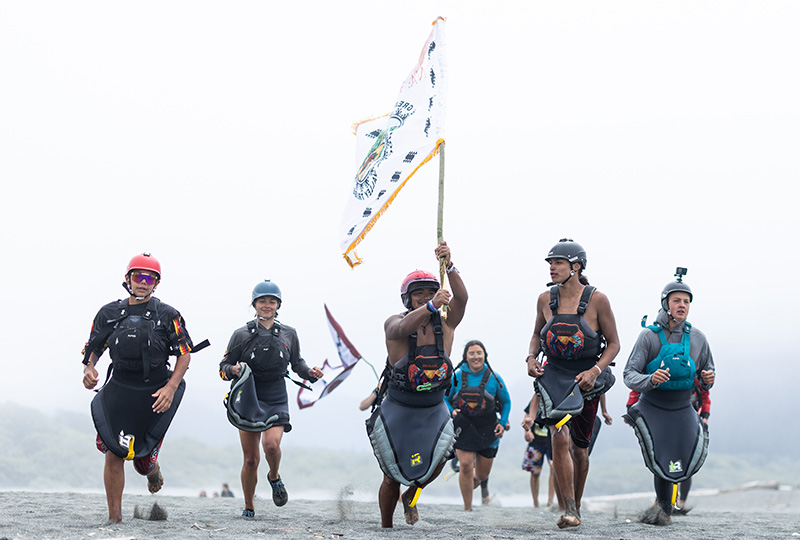
Paddle Tribal Waters Students, carrying the Hoopa Tribe flag, running to the Pacific Ocean after completing a 30 day, 310 mile source to sea descent of the Klamath River. © Cole Moore
The report provides five recommendations to funders which can improve funding flows to youth-led initiatives for a stronger biodiversity sector:
- Recognise the risk of a biodiversity sector without a regeneration layer and commit to resourcing youth-led initiatives.
- Co-design funding approaches that meet young people’s needs and contribute to a diverse funding landscape.
- Optimise for youth-friendly grantmaking operations that open funding access and build equity.
- Invest in a long-term vision through providing core, flexible funding and building relationships of mutual accountability.
- Reframe empowerment as for everyone – including funders!
Young people are already doing conservation work – what they need now is for funders to share in absorbing uncertainty and risk, and trust that the flourishing of the youth funding ‘ecosystem’, and our planet, will follow.

Read Ecologies of Empowerment.
Read the Executive Summary.
As part of our work to strengthen partner capacity and promote more equitable approaches to conservation philanthropy, our Chrysalis Youth Fund, co-designed with young people, provides direct, flexible funding to youth-led biodiversity organisations, directing resources to where they are most needed.