Why is freshwater, one of Earth’s most vital ecosystems, so overlooked in conservation funding?
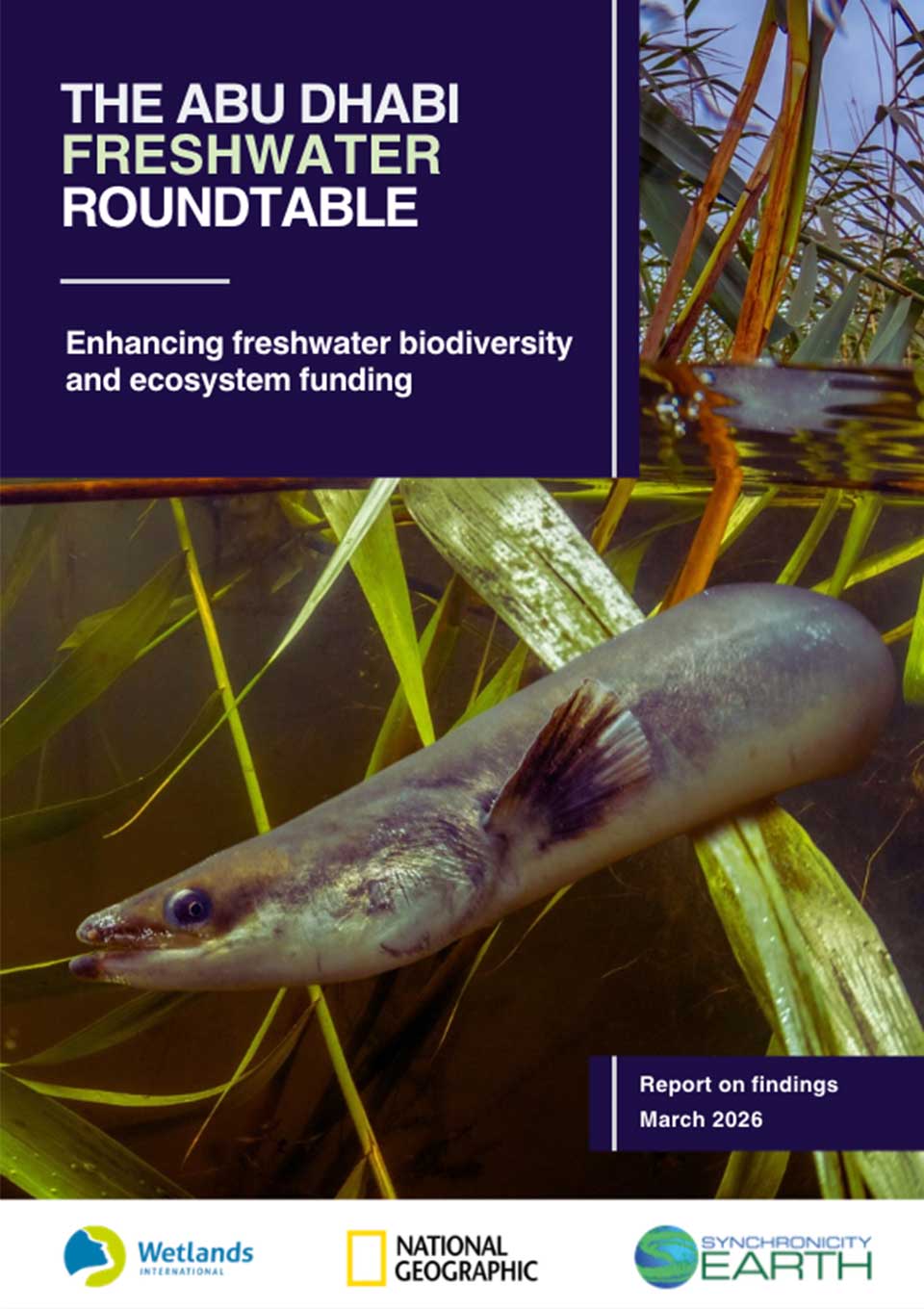
Following a roundtable discussion co-organised by Synchronicity Earth, Wetlands International, and National Geographic Society at the IUCN World Conservation Congress in Abu Dhabi, we are pleased to present a report exploring this question – and what we can do about it.
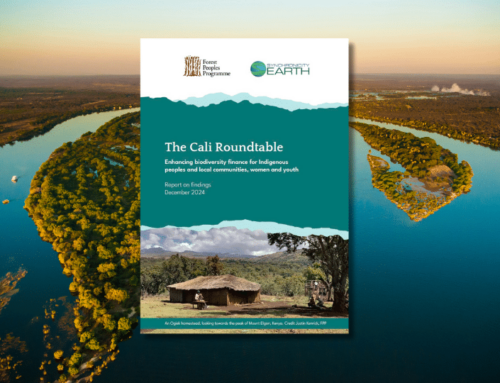
To mark the launch, we’re delighted to share this guest blog from Richard Lee, Wetlands International, on the report’s key findings and six recommendations for funders. Download the report here.
If you’ve glanced at the news today, you’ve probably seen a story about a devastating flood. Or a city running perilously low on water. Or growing food insecurity due to an unprecedented drought. Or more species slipping (or rushing headlong) towards extinction.
Now imagine that funders could invest in a solution that would help tackle all these challenges – a solution that would deliver real returns for people, nature and climate.
And yet, they’re not.
Welcome to the freshwater world!
Why freshwater funding matters
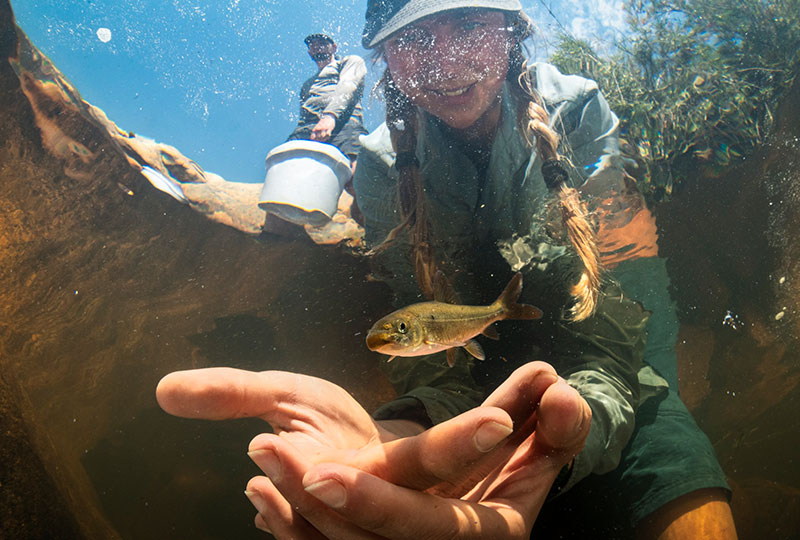
A sanctuary-reared sandfish is released back into the wild © Jeremy Shelton
Rivers, floodplains, lakes and other wetlands sustain our societies and economies. They supply almost all our freshwater, directly support 1/3rd of global food production, and provide an estimated US$58 trillion in annual economic value. Wet peatlands store more carbon than any other terrestrial ecosystem, while healthy wetlands and connected floodplains buffer us from extreme floods and drought. These extraordinarily diverse and productive ecosystems also support at least 10% of all known species although they cover less than 1% of the Earth’s surface.
More than enough reasons, you’d think, to invest in keeping them healthy. But the opposite is the case: we are continuing to plough vast amounts of money into their destruction – draining, damming, dredging, polluting and degrading them at an alarming rate. Sacrificing their priceless long term benefits for short term profit.
It’s crystal clear that healthy wetlands are central to tackling the greatest challenges of our era: enhancing water and food security, mitigating and adapting to climate change, reversing nature loss, and driving sustainable development. Protecting and restoring these life-support systems should be a priority for all governments, businesses, investors and philanthropists.
Why funders are overlooking freshwater
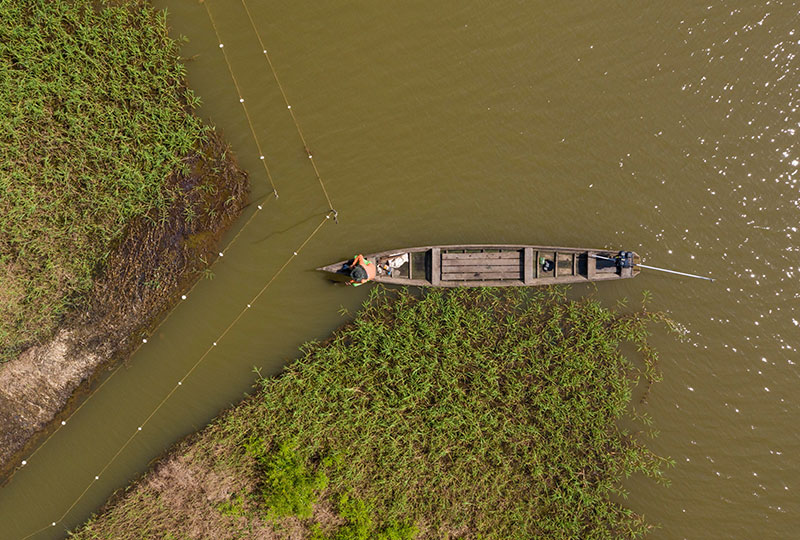
Lago Serrado, Brazil. © Hugo Costa
Yet, too often the effective action we need from these groups is elusive. Those with the resources to drive change continue to overlook and undervalue our rivers, lakes and wetlands – and seriously underfund freshwater conservation.
The assumption is often that freshwater biodiversity will benefit from terrestrial or marine focused conservation action. We know however, that this is not necessarily the case. Freshwater biodiversity faces its own distinct set of challenges, and therefore requires its own distinct set of conservation interventions.
Despite their extraordinary social, economic and ecological importance, freshwater conservation remains way down the priority list, particularly for philanthropists. For example, freshwater receives only 1 to 3.2% in some analyses of European philanthropic and research funding.
Meanwhile, at just 10.9%, water represented the smallest allocation in the 8th replenishment cycle of the Global Environment Facility in 2022. While global data are incomplete, the pattern is clear: freshwater biodiversity and ecosystems are chronically underinvested relative to their importance and vulnerability.
“Show freshwater as a solution, not a problem, by demonstrating how it solves climate, food, health, and equity challenges. Funders want to feel they’re solving multiple crises with one investment.”
Roundtable participant
What’s blocking freshwater conservation funding?
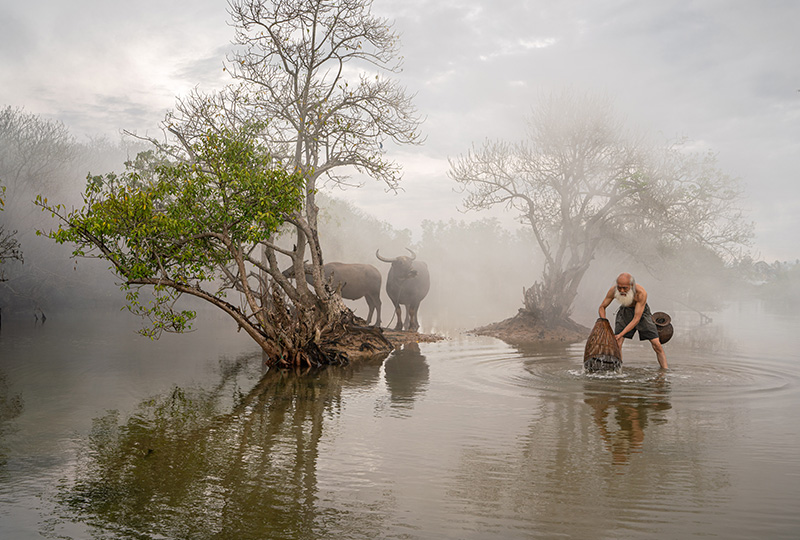
Fisherman with water buffalo © Pham Hung
I bet you’re wondering what is holding back the flood of funding needed to protect and restore freshwater ecosystems? And how can we remove those barriers?
So were we. That’s why Synchronicity Earth, National Geographic Society, and Wetlands International co-organised a roundtable with funders and practitioners at the IUCN World Conservation Congress in Abu Dhabi. Participants explored the barriers and recommended ways to overcome them and enable more (much more!) funding to flow.
The key insights are highlighted below but it’s definitely worth diving into our new joint report, which provides greater details on how to address the current bottlenecks.
So what is responsible for the reticence of donors to fund freshwater conservation:
- Donors face strategic fragmentation and uncertainty. Freshwater intersects with agriculture, energy, climate and biodiversity, leading to blurred mandates and assumptions it is already covered by other sectors or is up to governments;
- Freshwater suffers from low visibility and weak narratives. It lacks the emotional resonance of forests or oceans, is often framed as an engineering issue, is rarely linked with hopeful stories and freshwater life is often overlooked;
- Existing funding structures are poorly suited to the interdisciplinary, long-term, and governance-oriented nature of freshwater conservation; and
- Gaps in data, shared metrics and impact stories undermine confidence.
But none of these barriers are immovable. As we are discovering with the growing dam removal ‘Riverlution’, once you showcase effective solutions and change the existing narrative, barriers can (literally) be removed and new funding for freshwater protection and restoration can be unleashed.
Six ways to unlock funding for freshwater conservation
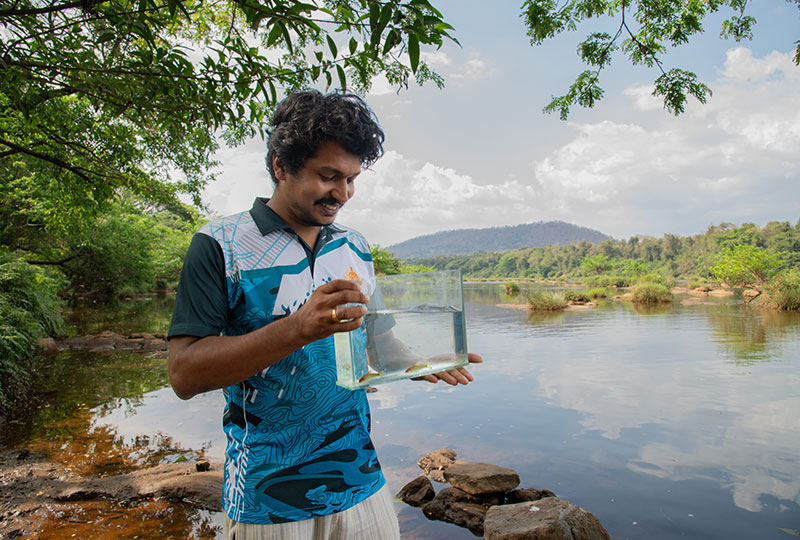
Rakesh Sariyam Arjun C.P., Kerala Forests and Wildlife Department, with a Denison’s Barb © Georgie Bull
The roundtable discussions seized on powerful opportunities to drive change that will accelerate funding and action, outlining six core recommendations for freshwater conservationists and donors:
- Treat freshwater ecosystems and biodiversity as a funding priority, recognising their distinct pressures and need for special, targeted interventions;
- Position freshwater conservation as a solution that is central to climate adaptation and human wellbeing;
- Increase funding for Indigenous Peoples and local community leadership through simplified, trust-based, long-term partnerships;
- Invest in stronger narratives, communications, and public awareness;
- Support flexible funding mechanisms, including regranting and small-grants programmes; and,
- Foster donor collaboration and strengthen governance, policy, and advocacy.
“Many donors think in terms of ‘land and sea’, so link freshwater to forests and oceans. Let’s show how rivers connect ecosystems: no forest without water, no ocean without rivers.”
Roundtable participant
The case for accelerating funding now!
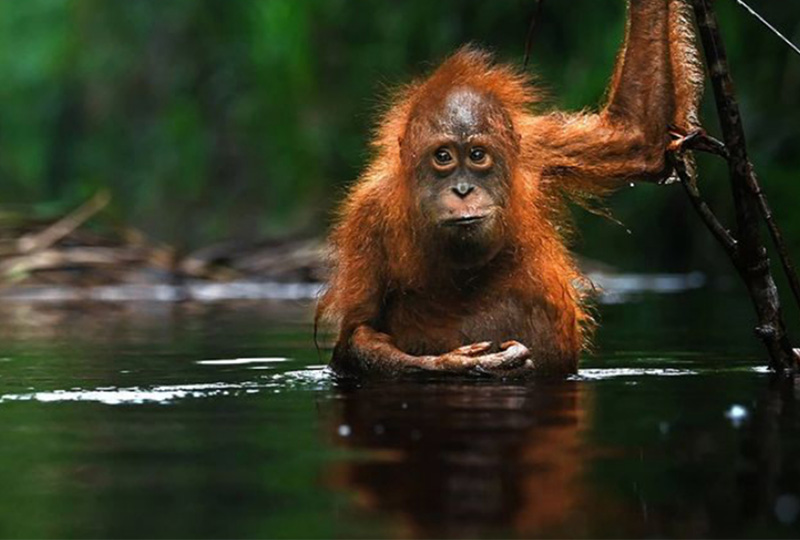
Young orangutan in Indonesia © Rakesh Sariyam
It is a long path to properly prioritising and funding the protection and restoration of rivers, lakes and wetlands but these six steps will certainly speed up the process. And it is critically important that we all start making changes today.
Funding for freshwater ecosystems has lagged far behind for far too long. Slowly the world is waking up to the importance of healthy freshwater wetlands, but it is still too slow. By changing the narrative, filling data gaps, sharing evidence-based stories on conservation and restoration successes, and collaborating across funding strategies, the freshwater and philanthropic communities can catalyse high-impact, cost-effective action – which can then be replicated at scale with government and private sector funding.
The impact will be transformational. Unleashing the floodgates for freshwater conservation will reverse the degradation of our rivers, lakes and wetlands. Investing in protecting and restoring them will ensure they can continue to sustain our societies and economies, and the essential web of life and ecosystems from the mountains to the sea. The existing obstacles are barriers that we have constructed.
We can tear them down and instead invest in strengthening the cornerstone of a nature-positive, climate-resilient and sustainable future – healthy rivers, lakes, and wetlands.



If you are interested in joining follow-up actions arising from the roundtable, or would like to discuss any element of the report further, please contact Félix Feider (felix@synchronicityearth.org).
For more news and insights about how we can make environmental funding more effective and equitable, subscribe to our LinkedIn newsletter Reimagining Philanthropy.