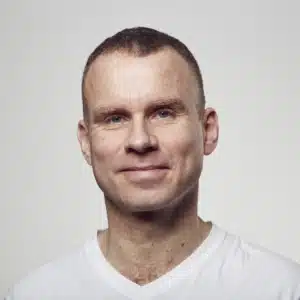
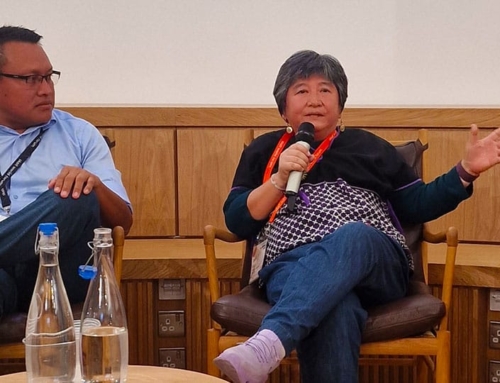
Carla Bengoa Rojas joined Synchronicity Earth as our Biocultural Diversity Programme Manager in 2024. She has collaborated with Amazon and Andean communities in Peru, Indigenous women entrepreneurs worldwide, and Indigenous experts in international forums.
In this interview, we speak to Carla about her early interest in environmental law, her experience working with Indigenous Peoples and local communities in Peru and in global conservation forums, and her role in the evolution of Synchronicity Earth’s Biocultural Diversity programme.
Q: What are your early memories and experience of nature?
I grew up in a big city, Lima, but my early connection to nature was through my grandparents. Both on my mum’s and my dad’s side, my grandparents lived in the countryside, a long way away from the big cities. My mum’s family were from the Amazon, so they would tell me about the river, about their communities and their neighbours – they always had so many interesting stories! And when we were younger, we used to go on road trips around Peru, to the Andes and Amazon and to explore the desert up towards the central and north coast.

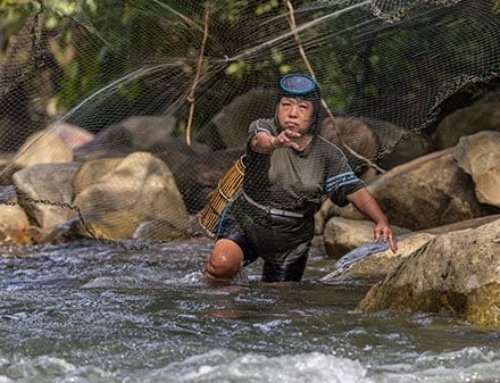
On the shore of the Yanayacu river in the Peruvian Amazon. iStock
But really, I first came into nature conservation through my interest in people. I was born and raised in Peru. Peru is a beautiful country in so many ways, and I’m very proud of my roots. But the country is also marked by huge social inequality, poverty, and discrimination. The people with least money often have fewest opportunities for quality education, very poor access to public services, and face the greatest barriers to defending their basic rights.
As I was growing up, my aunt worked for an NGO dedicated to using law and policy to try to combat the impacts of this inequality. Her work opened my eyes to how law could be a powerful tool for change, so that’s what I went on to study.
Q: During your time as a student, at what point did you start focusing on environmental law?
I had the privilege of taking a module on environmental law, taught by Manuel Pulgar Vidal who was the Minister of the Environment for Peru at the time, and who later chaired the UN Climate Conference (COP 20) in Lima in 2014.
Through his classes, I started to understand how policy and law could help to establish legal protections not just for nature, but also for people who had historically been stewards of nature, protecting the diversity of their lands, resources and waters.
After that, there was no turning back! I joined the Peruvian Society for Environmental Law, and worked as a teaching assistant on Manuel’s courses for several years. I enjoyed having one foot in the classroom, but also felt very privileged to be able to spend so much of my time working in the field. This helped me to understand how some of the abstract, academic concepts around law and policy actually translated to reality on the ground, and the positive impact this could have on people’s lives and the environment. It was a humbling experience that opened my eyes to both the impact we can achieve and the immense work that still lies ahead.
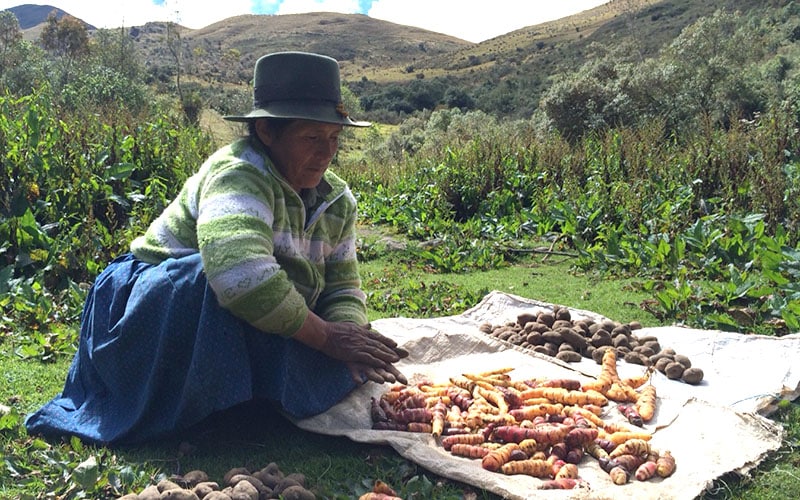
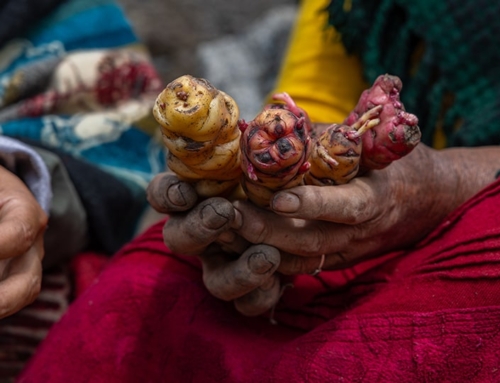
Benita, a potato farmer, at her ‘chakra’ (farm) on the top of an Andean mountain, Huánuco, Peru, 2014. © Carla Bengoa Rojas
Q: Can you tell us about some of your early experiences working with communities?
During my time with the Peruvian Society for Environmental Law, I was able to work a lot with communities, both in the Andes and in the Amazon. In the Andes, I spent a lot of time with small-scale farmers who would show me the many varieties of potato and other Andean roots that had been passed down through the generations.
Their connection to nature was so strong, they protected these varieties as if they were members of their own families. It was part of their inheritance, and they wanted to maintain that and in turn, pass on the knowledge of how to cultivate them to their children.
My time working alongside these communities remains one of my most treasured experiences and continues to be one of my greatest sources of inspiration. I carry those memories with me everywhere to remind me of my purpose and guide my work.
‘Mining’ traditional ecological knowledge
In the Amazon, I also spent a lot of time working with communities, learning about their relationships with people coming into their community from outside, particularly those seeking to use traditional Indigenous and local knowledge to develop new products such as medicines or cosmetics. I wanted to understand what these communities considered acceptable within their territories, and what they expected in return from the activities happening on their land.
My focus in this work was ensuring that communities’ rights over their traditional knowledge were respected and upheld. Many years later, this led me to a role at the World Intellectual Property Organisation (WIPO), a UN agency where I contributed to the Traditional Knowledge Division. There, we worked on ways to use Intellectual Property law to protect the traditional knowledge and cultural expressions of Indigenous Peoples, ensuring not only that they have a right to provide their consent before their knowledge is accessed, but also that the benefits of its use are shared with them.

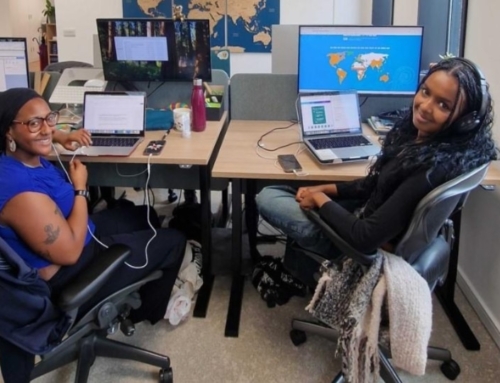
First cohort of Indigenous women participating from WIPO ‘Training, Mentoring and Matchmaking Program on Intellectual Property for Indigenous and Local Community Women Entrepreneurs’. Geneva, 2019. © WIPO
Q: What is your role at Synchronicity Earth?
I manage Synchronicity Earth’s Biocultural Diversity Programme. When we say ‘biocultural diversity’, we’re talking about how biological diversity and human culture are intertwined. It’s the recognition that nature and people depend on each other and have evolved together through history. The result is a rich body of knowledge on how to sustainably steward landscapes, waters, plants, and animals which not only enables human collectives to exist but has also shaped their social identities and customary laws.
A change of emphasis for our Biocultural Diversity Programme
Five years ago, Synchronicity Earth launched its Biocultural Diversity Programme to provide support for conservation partners led by Indigenous Peoples and local communities. This biocultural approach to conservation, based on the principle that effective conservation needs Indigenous and local communities to play a leading role, has increasingly become embedded throughout all our programmes.
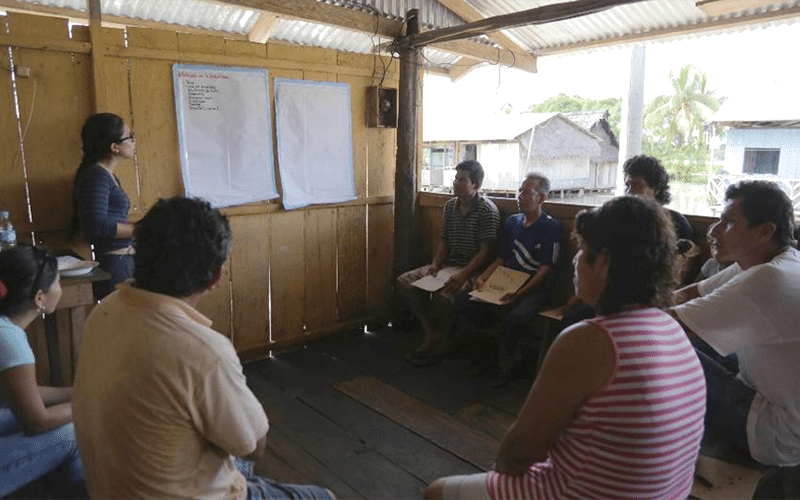
Local workshop on agrobiodiversity hotspots in the community of Sapuena, Loreto, Peru, in 2014. © Carla Bengoa Rojas
To reflect this evolution, we are adapting the focus of our Biocultural Diversity Programme. While the programme will still support groups operating at a local level, we are increasing funding and resources to support Indigenous and community-led networks that connect and empower frontline communities.
Around the world, our partners are bringing together Indigenous Peoples and local communities to defend their lands and natural resources from escalating threats, while safeguarding the ecosystems and species that depend on them.
These networks take many forms: from grassroots alliances and regional coalitions to transboundary movements, all rooted in shared struggles and collective strength. By reinforcing these connections, we help build the resilience, visibility, and influence of those most affected by environmental and social injustice.
We are also making increased efforts to create space for Indigenous and local voices in global policy arenas; something that is both necessary and overdue. The meetings held under the Convention on Biological Diversity (CBD), and other international forums, such as the IUCN World Conservation Congress (IUCN WCC), offer Indigenous organisations exceptional opportunities to advocate for their rights but also to showcase concrete alternatives to mainstream conservation approaches. With the right support, we trust communities can grow their political influence and effectiveness while remaining grounded in their priorities.
Last year, at the Convention on Biological Diversity (CBD COP 16), we supported the participation of 19 grassroots partners from ten different countries, investing a lot of time and resource to ensure they all felt comfortable and had the information they needed to get as much as possible from attending.
We stood behind our partners interested in attending the conference as we know their voices would not otherwise have been heard in that space.
It is far more challenging for certain organisations and people to attend; for example, partners from Melanesia had to travel over 30 hours to make it to the conference!
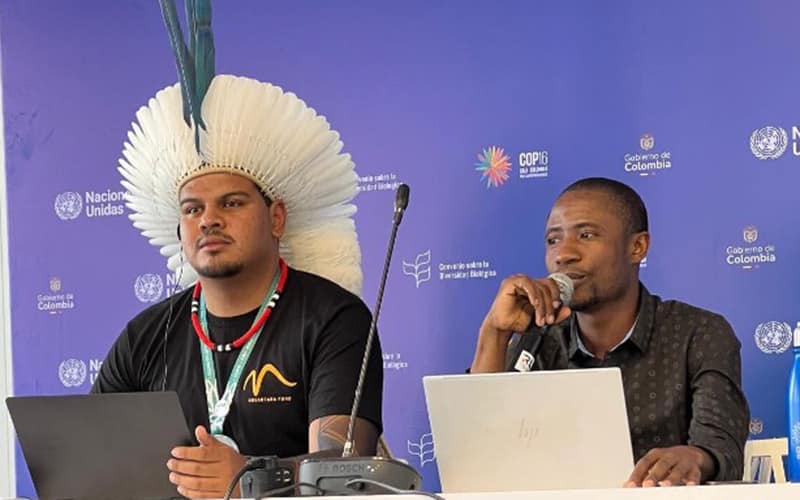
Jean-Paul Mwassa, ANAPAC, speaking at an ‘Indigenous Youth Dialogue’ at CBD COP 16, Cali, Colombia, 2024. © Synchronicity Earth
It was wonderful to have that opportunity to spend time together in person, to strengthen our bonds, and also see them building connections among themselves across different cultures and languages, finding commonality and strength in some of the challenges they are facing that are shared by so many Indigenous Peoples and local communities across the globe. And it was incredible to see them in action, to hear their stories and to see how impactful their words were not just for us, but I think for anyone attending events where they were speaking.
Throughout my career, my work has brought me very close to some of these policy discussions. I’ve followed negotiations under the Convention on Biological Diversity and the International Treaty on Plant Genetic Resources for Food and Agriculture. As I mentioned earlier, at some point of my journey, I was part of the traditional knowledge division of the WIPO and had the chance to support the negotiations that recently led to the adoption of an international framework to protect traditional knowledge.
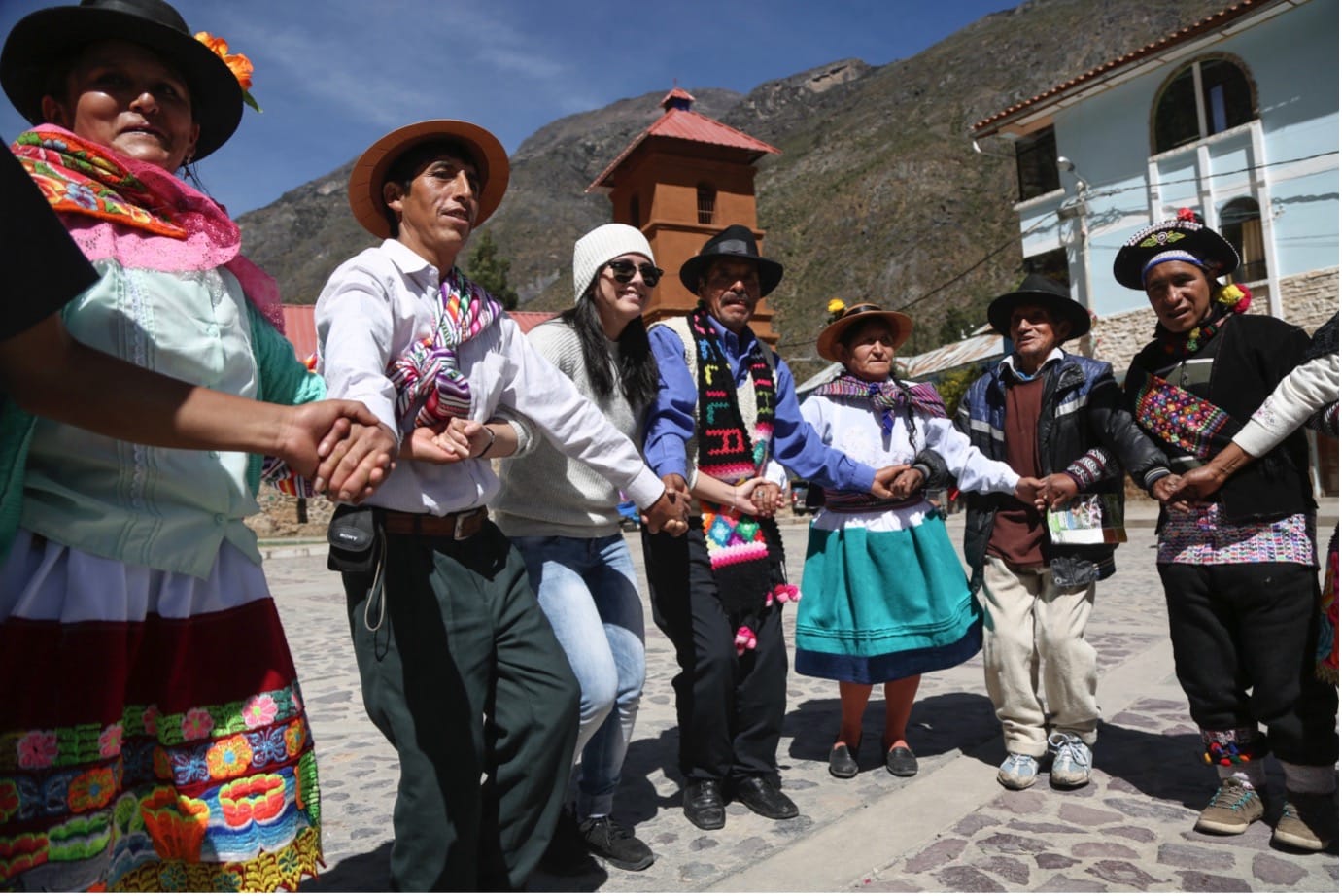
Celebration of the first annual meeting of “AGUAPAN”, the association of native potato guardians of central Peru. Junín, Peru, 2015. © Carla Bengoa Rojas
I also contributed to the work of the Intergovernmental Science-Policy Platform on Biodiversity and Ecosystem Services (IPBES), a platform equivalent to the Intergovernmental Programme on Climate Change (IPCC) in the climate world, that gathers knowledge to inform global conservation policy making.
What really stands out, is that this knowledge generation is not only based on Western science, but also on Indigenous and local knowledge systems, and values them in the same in the same manner.
The presence of diverse Indigenous and local voices in global biodiversity policy is a crucial step to achieving transformative change. When Indigenous Peoples, Afro-descendant, and local communities are at the table, their rights, knowledge systems, and lived experience can shape decisions from the ground up. And one of the most effective ways this participation is strengthened is by the action of Indigenous and community-led networks.
These networks not only support grassroots groups in achieving their objectives locally but also hold the political influence to push for systemic change. They often play a key role in increasing Indigenous and local representation in policy discussions, strengthening decision-making power, challenging unfair laws, and holding governments accountable. When these networks are well-resourced, they can amplify the impact of individual initiatives and strengthen the broader movement to tackle the root causes of biodiversity loss and drive lasting change.
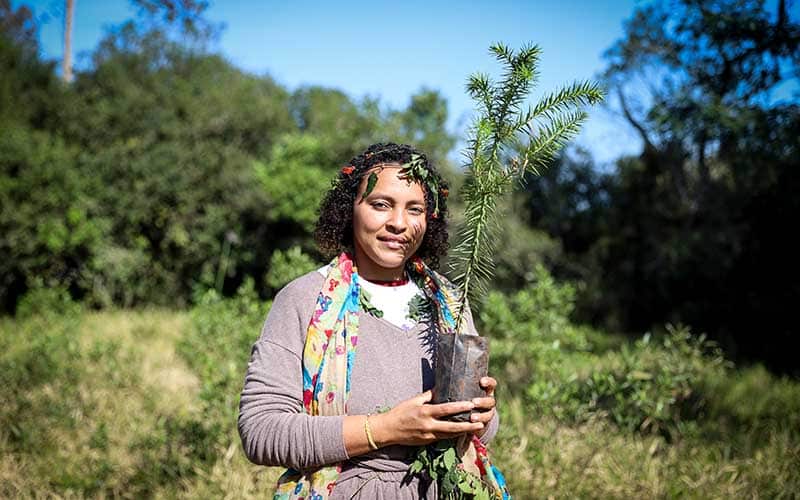
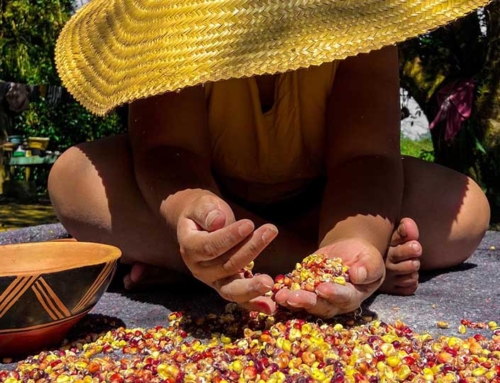
Synchronicity Earth partner Fundo Casa, a Fund that invests in communities to generate positive impacts and foster sustainable development, supports women to plant native seeds to help restore the Atlantic Forest in Rio Grande do Sul state, Brazil. © Fundo Casa
Q: What do you think are some of the challenges and changes needed to conservation funding?
This is one of the most urgent discussions currently underway – how to do conservation financing better? It’s critical that we think about how Indigenous Peoples and local communities can access conservation funding directly, but also in a way that is culturally appropriate.
At Synchronicity Earth, we recognise the need to be part of those discussions, and where we can, to contribute to this ambition being translated into actual practice.
As a philanthropic organisation, we are privileged to have a lot of flexibility, and we make the most of that in ways that benefit our partners. We’re constantly working to improve how we fund to try to make it easier for our Indigenous and community led partners.
Q: Where would you like to see the conservation sector in 10 years?
This is such a difficult question! I’m not sure I have a great answer, but I would like to see a sector that is better at ‘walking the talk’.
Indigenous Peoples are starting to have a seat at the table, but they’re not necessarily being heard. I’d like to see conservation become more inclusive, more open to different ways of seeing the world and of seeing nature, where those actually conserving nature are getting the support that they need to continue doing it.
Some of these changes might take a long time, but the brilliant thing about Indigenous peoples and local communities is their relentless commitment. Even if their funding is cut, they carry on because for them it is about survival, whether we are there with them or not.
Q: And what would you personally like to have achieved?
I’d love to see the funding model that we have at Synchronicity Earth and the partnerships we build in the next few years make a difference in realising that vision of a truly inclusive conservation sector that has biocultural diversity at its heart.